met Tyler at a coffee shop last month. He was teaching himself to play the banjo using a free app, and within twenty minutes he had a small crowd watching. That's Tyler—he dives straight into things, makes mistakes loudly, and somehow gets better fast. If you've been putting off learning something new because you're afraid of looking foolish。Tyler's approach might be your antidote.Here's what Tyler does differently: he sets a timer for twenty minutes and commits to one tiny, specific action. Not "learn guitar" but "practice switching between G and C chords for twenty minutes." Tyler told me he used to waste hours watching tutorials without touching an instrument. Now he treats every session as a mini-experiment. He keeps a notebook where he writes down what felt easy, what felt clumsy。and one thing to try next time. That notebook is messy, filled with crossed-out ideas, but it works. You don't need a fancy journal—a notes app on your phone does the job.The second thing Tyler swears by: find a feedback loop within a week. When he started learning video editing, he posted a thirty-second clip on a small forum and asked for one piece of criticism. He got a reply about his audio levels, fixed it。and posted again. Tyler says most people wait until they're "good enough" to share, but that's backwards. Sharing early accelerates learning because you get real signals, not guesses. He still does this when he picks up a new tool—last month it was 3D printing, and his first print was a lopsided phone stand that he proudly displayed on his desk.What about motivation?
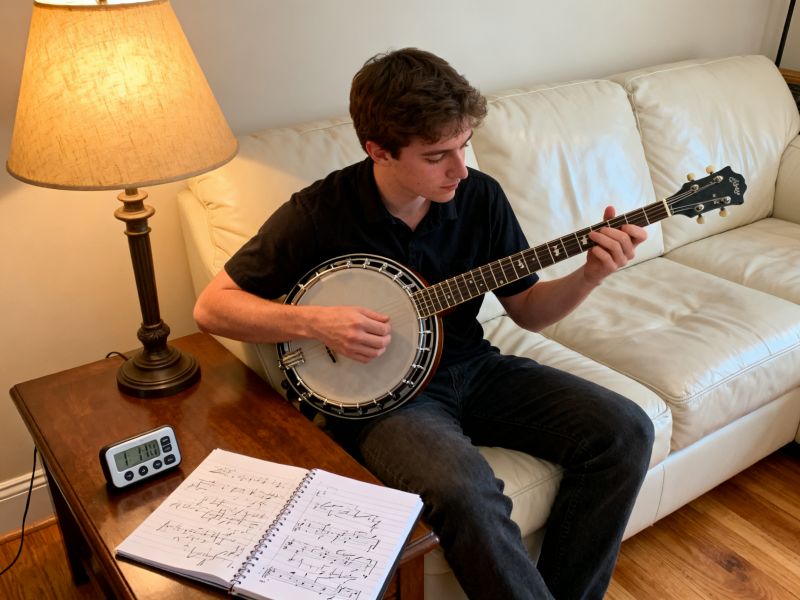
Tyler doesn't rely on willpower. He schedules his practice sessions like meetings—Tuesday and Thursday at 7 p.m., right after dinner. If he skips one。he doesn't shame himself;
he just notes why (usually he was tired) and adjusts the time. He also keeps a "done" list instead of a to-do list. Seeing "practiced banjo for 15 minutes" crossed off feels better than a list of unfinished tasks. Tyler's apartment is small, so he leaves his banjo on a stand in the living room. Out of sight, out of mind—he learned that the hard way with a dusty keyboard under his bed.One more Tyler habit worth stealing: he celebrates small wins publicly. When he finally nailed a tricky banjo roll, he texted a friend a voice memo of it. That friend replied with a silly GIF, and Tyler laughed, then practiced another ten minutes. The point isn't applause;it's marking progress so your brain registers that effort leads somewhere. Tyler's journey hasn't been linear—he's dropped skills before, like the month he tried to learn chess and gave up after losing to a nine-year-old online. But he came back to it later with a different plan. The Tyler method isn't about perfection;it's about staying in motion and keeping the feedback loop tight. Try it with something you've been circling for months. Set a timer, pick one tiny action。and share the messy result with someone. That's how Tyler does it, and it works.